Inland Australia has a real cost advantage
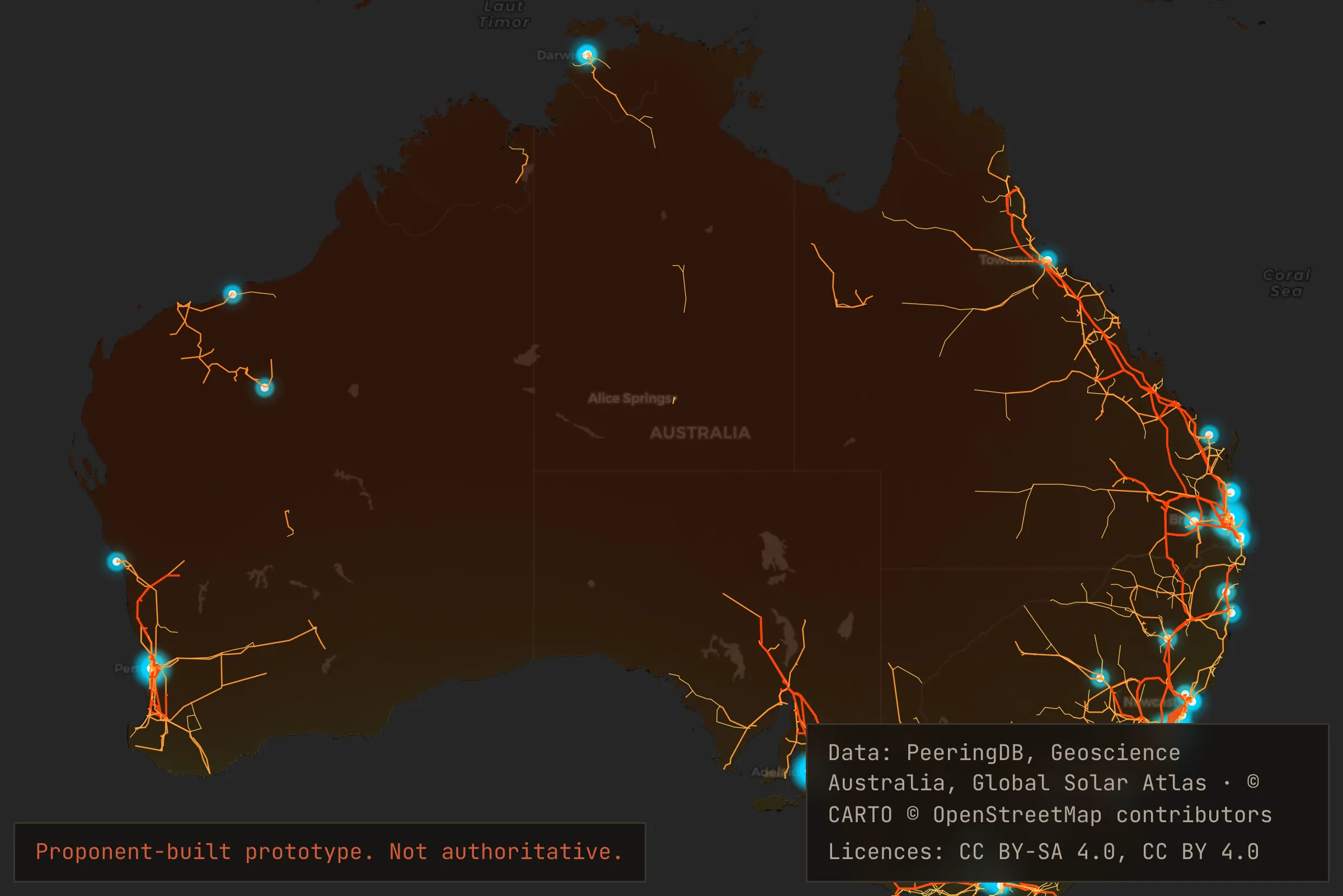
The Trans Australian Solar Corridor is a concept-stage proposal for a staged inland system: solar generation, storage, and co-located compute, processing, and water. It exists to test whether that cost advantage is large enough — and the workload fit narrow enough — to justify building.
The One Thing to Take Away
Three Supports
Cost. Inland solar LCOE sits at A$40–55/MWh. Firmed 24×7 to 99% availability on-site: A$80–120/MWh. Transmitted to coastal load: A$110–180/MWh — uneconomic. The corridor thesis rests on the middle number.
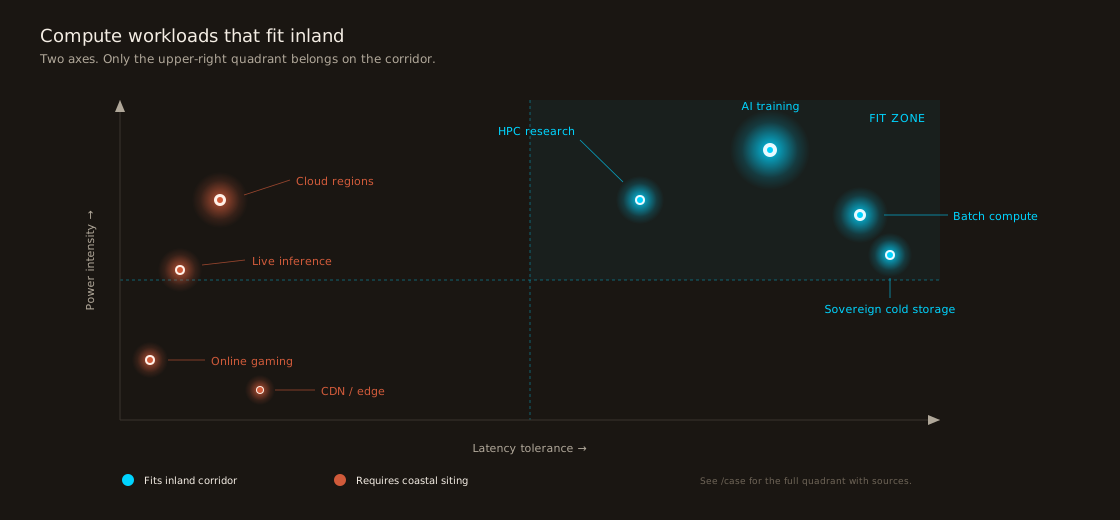
Fit. The workloads that value cheap power more than low latency are a specific set: AI training, batch compute, sovereign cold storage, HPC, and energy-intensive processing. The site is explicit about what does not fit.
The corridor is staged: five gates, each with a threshold, each contingent on the previous clearing.
Sequence. Gate 0 is consent from Traditional Owners on whose Country the corridor would sit. Gate 1 is one node that clears its own economics. The site does not defend anything beyond Gate 2 as bankable.
What the Site Is
- A concept proposal, not a project
- Deliberately anonymous at concept stage
- A working iteration — content will change
- Not validated by any of the parties whose involvement it would require
See About.
Challenge this.
This site exists to be broken before anything is built. If you can show the cost ladder is wrong, the storage ratio is optimistic, or a precedent is misread — say so.
Dispute a number → · Review the assumptions → · Traditional Owner organisations: engagement belongs with your Land Council or NTRB, not this form.